Brick Math
  • Home
  • Curriculum
    • For Schools
    • For Teachers
    • For Parents/Homeschool
  • Order
    • Products
    • School Orders
    • International Orders
  • Videos
  • Praise
  • Blog
  • About
    • Sample Lessons
    • Summer Programs
    • FAQ
  • Contact
    • Lesson of the Month
Picture
Learning math can be hard. Brick Math makes it easier—and fun!
 
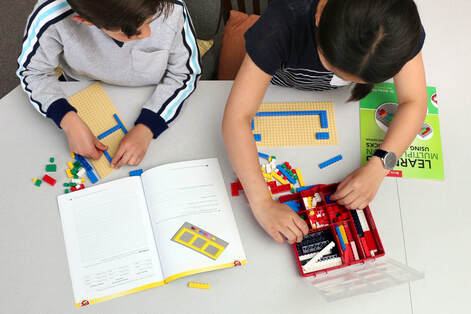
Brick Math helps students learn K-6 math by modeling with LEGO® bricks. There are 11 math subjects in Brick Math, including: Counting, Addition, Subtraction, Multiplication, Division, Basic Fractions, Basic Measurement, Fraction Multiplication, Fraction Division,  Decimals, and Advanced Measurement and Geometry. When students are taught with Brick Math, they develop a deeper understanding of the concepts that are the foundation of true mathematical knowledge. 
 
Brick Math works for teachers in the classroom, as well as for parents who need a way to help their kids with homework. It is perfect for remediation, intervention, gifted learners, as well as a homeschool curriculum.

Dr. Shirley Disseler, author of the Brick Math books,  is the foremost expert in the US on learning with LEGO® bricks.
Read more about Dr. Shirley Disseler here.

Read FAQs to learn more about Brick Math.

Get started with Brick Math!

Video Lessons
Picture
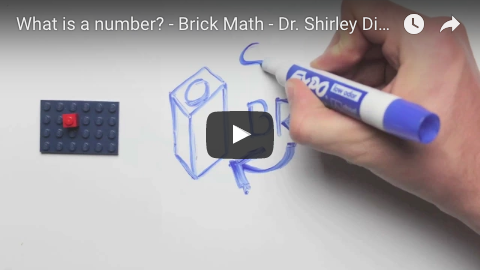
What Is a Number?
Simple models that introduce the idea of numbers to early learners.
​From Counting and Cardinality
Picture
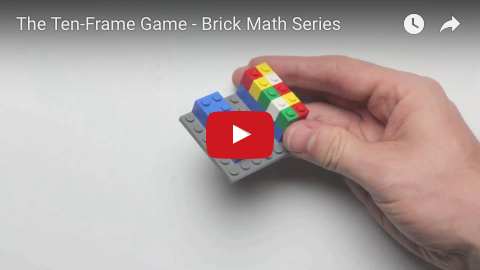
The Ten-Frame Game
Models that teach students how to think in terms of sets of ten.
​From Counting and Cardinality
Factors of 16 YouTube Video - Brick Math Series
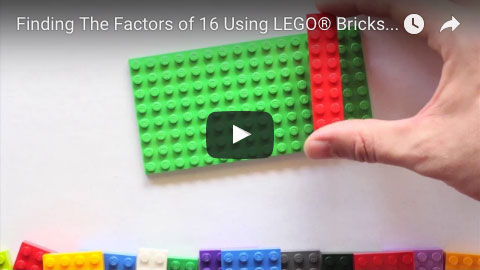
Finding Factors of 16 
Simple and clear way to teach concept of factors.
From Basic Fractions
Adding Fractions - Brick Math Series
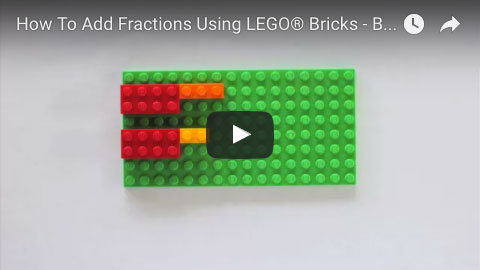
Adding Fractions 
Brick models that show what it means to add fractions with like denominators.
From Basic Fractions
Multiplication YouTube Video - Brick Math Series
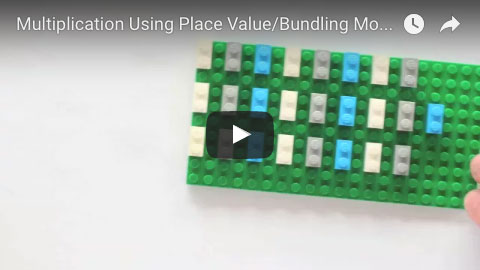
Multiplication Using Place Value/Bundling Models
Models that show how place value can be used to multiply.
From Multiplication
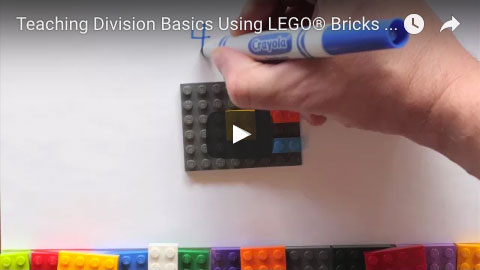
Division Basics YouTube Video - Brick Math Series
Division Basics 
Models that clearly introduce the concept of division.
From Division
More Videos

Easy to teach. Easy to learn.

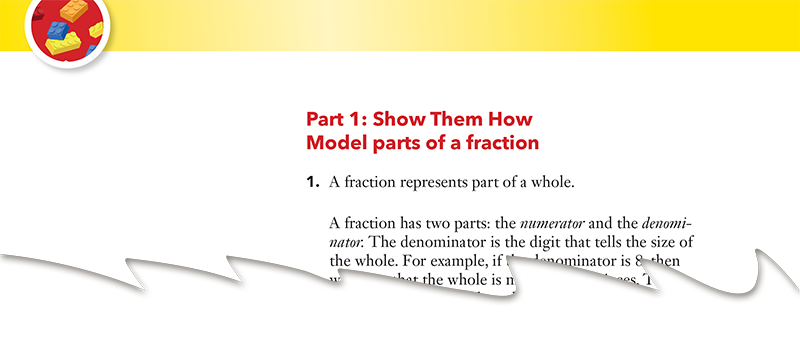
​Use the lessons in the Teacher Edition for any math subject. Start by taking students through the Part 1: Show Them How section of each chapter. Build the brick models, show them to the students, and ask students questions as directed. Be sure to use the math vocabulary for each lesson.
Brick Math Series - Easy to Teach
Have students build the same models themselves so they are manipulating the bricks as you are guiding them. If possible, use a document camera to display your models as you build them.

Then have students draw their models and answer the questions in their companion Student Editions.

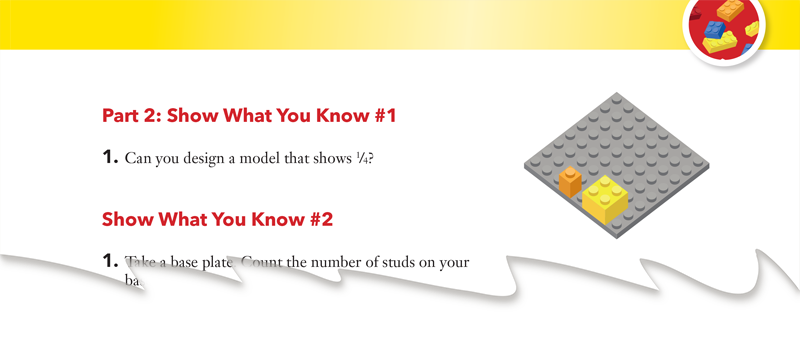
​Once students have mastered the modeling processes from Part 1, move to the Part 2: Show What You Know section of the chapter. Ask students to complete each of the problems, first by modeling with bricks and then drawing their models in the companion Student Edition.
Brick Math Series - Easy to Teach
​Move through the room, checking that students are building their models correctly and that they understand the concepts behind the models.

Tracking and Assessment

The Student Editions include an Assessment for every chapter, a chart to track each student's progress, and additional problems for practice and challenge.

Brick Sets

Picture
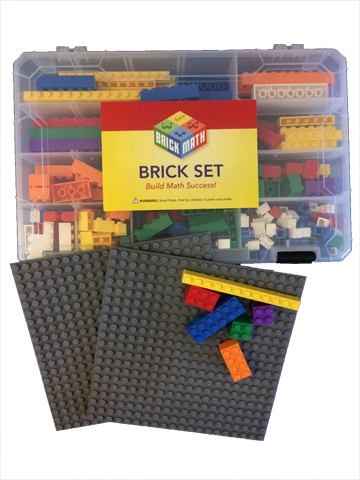
Brick Math brick sets, specially designed for the program, are packaged in sturdy divided storage boxes and can be shared by two students. Two baseplates are included with each Brick Math brick set. 

Each chapter lists the bricks suggested for the lessons in that chapter for every two students. Each book includes a total brick inventory that lists all the bricks suggested for the program for every two students. 

Classroom Management Tips

  • Before starting, have a conversation with the students about using bricks as a learning tool rather than a toy.
  • Teach students the language of bricks (baseplate, stud, 1x1, 1x2, etc.).
  • Assign brick sets to specific students by number and always give the same students the same sets. This helps keep students from taking home or misplacing bricks. If they know they will always have to work with the same brick set, they are more likely to be careful with their set.
  • Do not teach with bricks—or any manipulative—every day. Students also need to think through the math processes without a physical model.
  • To keep bricks clean, put them in a hosiery bag and wash on the top rack of the dishwasher. Let them air dry.
  • To keep bricks from sliding off desks, use foam shelf liner cut into rectangular sections or large meat trays (you can often get these free from a local supermarket).
  • Active learning breeds active learners! Students will be motivated and engaged in math when they are using bricks. It will not be quieter in your classroom, but it will be full of chatter about math!

Research-Based

Brick Math is based on theories of Constructionism and brain research. Numerous studies have shown the effectiveness of teaching math using manipulatives to incorporate a hands-on style. Brick Math builds on this body of research by utilizing LEGO® bricks as the manipulative, adding elements of creativity and enjoyment to learning foundational mathematics.
Learn More
Shop Online
​

Learn  More
Company

SCHOOL ORDERS

​TEACHER OrderS

PARENTS/HOMESCHOOL ORDERS

INTERNATIONAL ORDERS
CURRICULUM FOR SCHOOLS
CURRICULUM FOR TEACHERS
CURRICULUM FOR PARENTS/HOMESCHOOL
STUDIES
DIFFERENTIATION
RESEARCH
TRACKING
ALIGNMENT

About

BLOG

FAQ

Contact

Brick Math  |  211 North Ave.  |  St. Johnsbury  |  Vermont  |  05819   
P 802-751-8802  |  F 802-751-8804
Terms of Use 
 |  Privacy Policy  |  Copyright © Brick Math 2025
Partial funding for development of this website made possible by a Rural Business Development Grant through the Northern Community Investment Corporation from USDA Rural Development.
  • Home
  • Curriculum
    • For Schools
    • For Teachers
    • For Parents/Homeschool
  • Order
    • Products
    • School Orders
    • International Orders
  • Videos
  • Praise
  • Blog
  • About
    • Sample Lessons
    • Summer Programs
    • FAQ
  • Contact
    • Lesson of the Month